

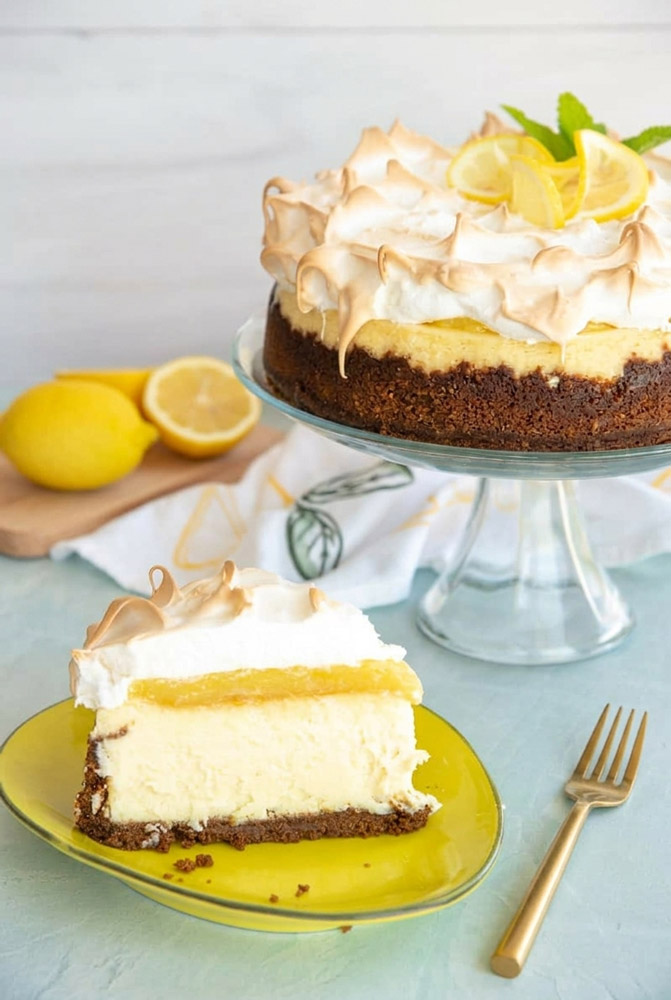
There are desserts you bake for a casual Tuesday dinner, and then there are desserts you create when you want every single person at the table to stop talking mid-bite. This Lemon Meringue Cheesecake is firmly the latter.
Growing up, my summer baking revolved around two distinct camps: the tart, sky-high peaks of a Southern lemon meringue pie, and the dense, velvety richness of a New York-style cheesecake. For years, I kept these two loves separated by seasonal boundaries. But when you marry the deep, spiced snap of molasses-ginger cookies with a bright, ultra-creamy lemon cheesecake base, layer on a homemade lemon curd, and crown it all with golden, pillowy meringue peaks—pure culinary magic happens.
This recipe balances acidity and richness. The natural bite of fresh lemon cuts right through the dense cream cheese, while the warmth of ginger bridges the gap between tangy citrus and sweet, airy marshmallow-like meringue. It looks like it walked out of a high-end French patisserie window, yet it uses straightforward steps you can master in your home kitchen.
Recipe Overview & Baker’s Strategy
Baking a layered masterpiece like this requires patience, but the actual hands-on technique is surprisingly approachable.
Timing and Expectations
Active preparation takes about 30 minutes, while the total bake time across the crust, batter, and meringue spans roughly 1 hour and 45 minutes. The crucial phase is the gradual cooling and overnight chilling—factor in 8 to 10 hours of chill time before your event. This is the ultimate make-ahead centerpiece: make the crust, bake the cheesecake, and chill it a day ahead, then whip and brown the meringue a few hours before serving.
Yield and Scaling
Baked in a standard 8-inch or 9-inch springform pan, this rich dessert yields 12 to 16 generous slices. Because baked custards and cheesecakes rely on precise pan volume and water bath ratios, double-batching should be done in two separate pans rather than scaling up a single springform pan.
Essential Equipment & Workarounds
- Springform Pan (8 or 9-inch): Essential for cleanly unmolding delicate cheesecake walls.
- Heavy-Duty Aluminum Foil: Standard foil will tear and allow water to seep in; use 18-inch wide heavy-duty foil or place your springform pan inside a slightly larger silicone cake pan before placing it in the roasting pan.
- Roasting Pan: Anything deep enough to hold 1–2 inches of water around your springform.
- Stand Mixer or Hand Mixer: Ideal for both smoothing the cream cheese and whipping the egg whites to stiff peaks.
- Kitchen Torch (Optional): If you prefer not to return the cold cheesecake to a 375°F oven for browning, a handheld culinary torch offers pinpoint browning control.
Ingredient Deep Dive & Selection
Every single element in this recipe serves a functional and textural purpose. Here is what you need to know before shopping:
| Component | Star Ingredient | Role / Baking Science |
|---|---|---|
| Spiced Base | Gingersnap Cookies | Warm molasses & sharp ginger counteracts bright citrus |
| Silky Batter | Full-Fat Block Cheese + Cornstarch | Emulsion stability; builds smooth, sliceable structure |
| Tangy Curd | Fresh Lemon Juice & Zest | High acidity cuts richness |
| Cloud Topping | Egg Whites + Tartar | Protein network traps air; cream of tartar prevents weep |
For the Spiced Gingersnap Crust
- Gingersnap Cookies (397g / 14 oz package): Traditional graham crackers are delicious, but crunchy, hard gingersnaps provide a spicy, molasses-forward backbone that anchors the high acidity of the lemon. If gingersnaps are unavailable, speculoos/Biscoff cookies or classic graham crackers seasoned with 1 teaspoon of ground ginger and a pinch of allspice work seamlessly.
- Unsalted Butter (113g / 1/2 cup): Acts as the glue. Melted butter saturates the dry cookie crumbs so the crust compacts tightly and slices cleanly without crumbling apart.
For the Silky Lemon Cheesecake Base
- Cream Cheese (904g / 4 standard 8-oz blocks): Always choose brick-style, full-fat cream cheese. Tub spreads contain added water and stabilizers that cause the batter to bake up loose and watery. Crucial: Bring these completely to room temperature (about 2 hours on the counter) so they blend lump-free.
- Granulated Sugar (220g / 1 cup): Sweetens the base while tenderizing the protein matrix of the cheese and eggs.
- Fresh Lemons (2 large): You will use both the finely grated zest (for aromatic oils) and the juice. Avoid bottled lemon juice here; fresh citrus contains volatile flavor compounds that make the cheesecake pop.
- Ground Ginger (1 tsp) & Kosher Salt (1/4 tsp): Ground ginger reinforces the crust’s spice notes, while a pinch of salt balances the high dairy fat.
- Large Eggs (4 eggs, room temperature): Eggs provide structural lift and custard richness. Cold eggs will shock the softened cream cheese and cause curdled lumps in your raw batter.
- Heavy Cream (60ml / 1/4 cup): Introduces liquid fat to loosen the density slightly, giving each bite a melt-in-your-mouth texture.
- Cornstarch (40g / 1/3 cup): Acting as insurance, cornstarch binds moisture and stabilizes egg proteins, preventing the cheesecake from cracking or curdling under heat.
For the Curd & Meringue Crown
- Fresh Lemons (3 medium): Yielding 2 tablespoons of zest and 1/2 cup of fresh juice.
- Granulated Sugar (300g / 1 1/3 cups, divided): 1 cup sweetens and thickens the curd; 1/3 cup stabilizes the egg white foam.
- Large Eggs (3 eggs, whites and yolks separated): The yolks thicken the luscious stovetop curd into a velvety pudding, while the whites form the billowy meringue. Make sure not a single drop of yolk gets into the whites, or they will not whip properly.
- Cream of Tartar (1/4 tsp): An acid salt that strengthens the egg white protein matrix, yielding glossy, stiff peaks that resist weeping.
Step-by-Step Method
Follow these sequential steps closely for a bakery-quality finish:
Step 1: Prep the Oven and Water Bath
Preheat your oven to 350°F (180°C) with the rack positioned in the lower-middle third. Set 4 cups of water to boil on the stovetop. A humid, gentle baking environment is the absolute secret to a flat, velvety cheesecake without surface fractures or browned edges.
Step 2: Build and Blind-Bake the Crust
Pulse your gingersnap cookies in a food processor until pulverized into fine, sand-like crumbs. Pour into a bowl, stir in the melted butter, and mix until the texture resembles wet beach sand. Press the mixture firmly into the bottom and slightly up the sides of your 8 or 9-inch springform pan using the flat bottom of a metal measuring cup. Bake at 350°F for exactly 10 minutes until aromatic and crisp. Let it cool completely. Once cool, wrap the outside bottom and sides tightly with two layers of heavy-duty aluminum foil to guard against water ingress.
Step 3: Mix the Batter Smoothly
In your mixer bowl, combine room-temperature cream cheese, 1 cup sugar, lemon zest, ground ginger, and salt. Beat on low speed to integrate, then increase to medium for 3 minutes until smooth and glossy. Stop and scrape the sides and paddle halfway through—unmixed cream cheese hiding at the bottom of the bowl creates lumps later. Turn the speed back to low and add the eggs one by one, mixing for 2 minutes total. Stir in the lemon juice and heavy cream for 30 seconds, then gently fold in the 1/3 cup cornstarch just until combined (30 to 45 seconds). Do not overmix at this stage; excess air bubbles lead to surface cracks during baking.
Step 4: The Low & Slow Water Bath Bake
Place your wrapped springform pan inside a large, deep roasting pan. Carefully slide the roasting pan toward the oven rack, then pour the boiling water into the outer pan until it reaches about halfway up the sides of the cheesecake pan. Bake for 1 hour and 15 minutes. The cheesecake is done when the outer 2 inches are set and firm, but the center 2 inches still offers a soft, gelatin-like wobble when gently tapped.
Step 5: The Gradual Cool-Down (Do Not Rush!)
Turn off the oven. Prop the oven door open about 2 inches with a wooden spoon handle and leave the cheesecake inside undisturbed for 1 full hour. This step lets the residual heat finish cooking the center while gradually dropping the ambient temperature, preventing structural shock. Remove the pan from the water bath, strip off the foil, and cool to room temperature on a wire rack. Cover loosely with plastic wrap and refrigerate for at least 6 hours, ideally overnight.
Step 6: Make the Glossy Stovetop Curd
In a small saucepan, bring 1/2 cup fresh lemon juice and 1 cup sugar to a gentle steam over medium heat, stirring until the sugar dissolves. In a heat-safe bowl, whisk the 3 egg yolks, 1/3 cup cornstarch, and 3 tablespoons cold water until smooth. Slowly ladle 1 cup of the hot lemon liquid into the yolk mixture in a thin, steady stream while whisking vigorously—this tempers the eggs so they don’t scramble. Pour the tempered mixture back into the saucepan over medium-low heat. Whisk continuously for 1 to 2 minutes until it rapidly bubbles and thickens to a glossy pudding consistency. Remove from the heat, vigorously whisk in 2 tablespoons unsalted butter and 2 tablespoons lemon zest until emulsified, and let cool to room temperature for 1 hour.
Step 7: Unmold and Apply Curd Base
Run a thin paring knife under hot water, dry it, and slide it around the inner perimeter of the springform collar. Unlatch the collar and smooth any rough edges on the cake with an offset spatula. Spread the cooled lemon curd across the top of the chilled cheesecake, leaving a 1/2-inch bare perimeter around the outside edge. Pro-Tip: Leaving this border bare allows the meringue to adhere directly to the chilled cheesecake base, anchoring it securely so it won’t slide off during slicing!
Step 8: Whip the Meringue
In a spotlessly clean, grease-free glass or metal bowl, whip the 3 egg whites and 1/4 teaspoon cream of tartar on medium speed for 1 minute until foamy. With the mixer running, sprinkle in the remaining 1/3 cup sugar one tablespoon at a time. Once added, increase speed to medium-high and beat for 5 1/2 to 6 minutes until you achieve stiff, glossy peaks that hold their shape proudly when you lift the beaters.
Step 9: Crown and Toast
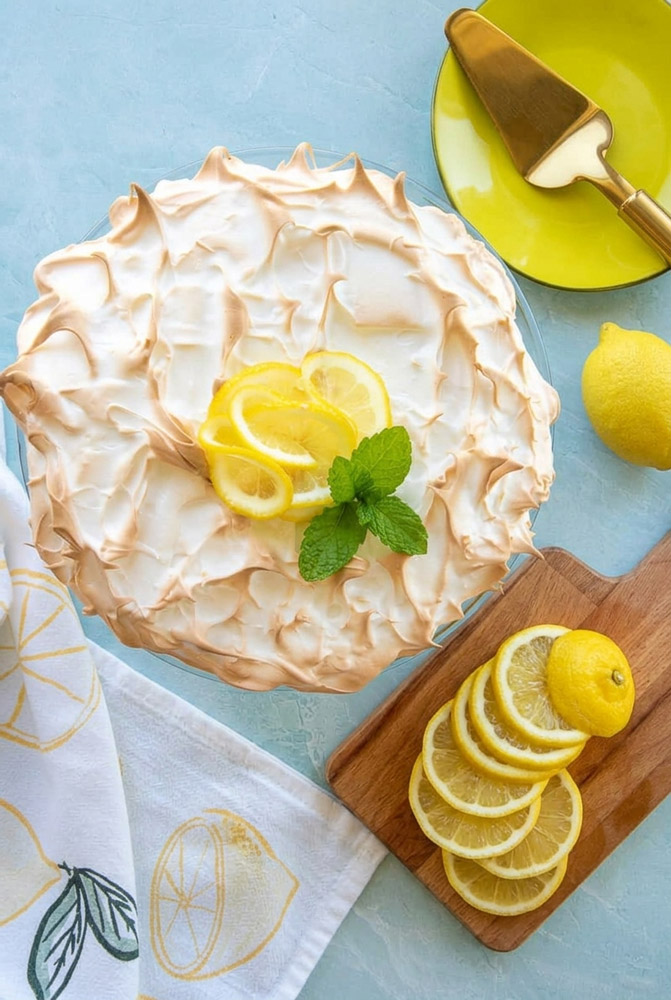
Preheat your oven to 375°F (190°C). Mound the meringue onto the cheesecake, first sealing the outer 1/2-inch border, then working inward over the curd. Use the back of a spoon or offset spatula to create dramatic, rustic peaks and swirls across the top. Bake for 9 to 10 minutes until the tips turn a rich golden brown. Let cool for 20 minutes before slicing, or return to the fridge to chill until serving.
Flavor Variations & Creative Tweaks
- Lime or Meyer Lemon Swap: For a sweeter, floral profile, substitute equal parts Meyer lemon juice and zest. Alternatively, use Key lime juice and a graham cracker crust for a Key Lime Meringue hybrid.
- Flambéed Finish: Instead of oven-browning, toast the meringue tableside using a kitchen torch for deeper caramelization without warming the chilled cheesecake underneath.
- Gluten-Free Friendly: Swap standard gingersnaps for certified gluten-free gingersnap or ginger-spice cookies; the rest of the cheesecake naturally relies on cornstarch rather than wheat flour.
- Berry-Layered Twist: Swirl 3 tablespoons of strained raspberry or blackberry coulis directly into the curd layer before topping with meringue.
Serving, Slicing & Storage
How to Cut Clean, Show-Stopping Slices
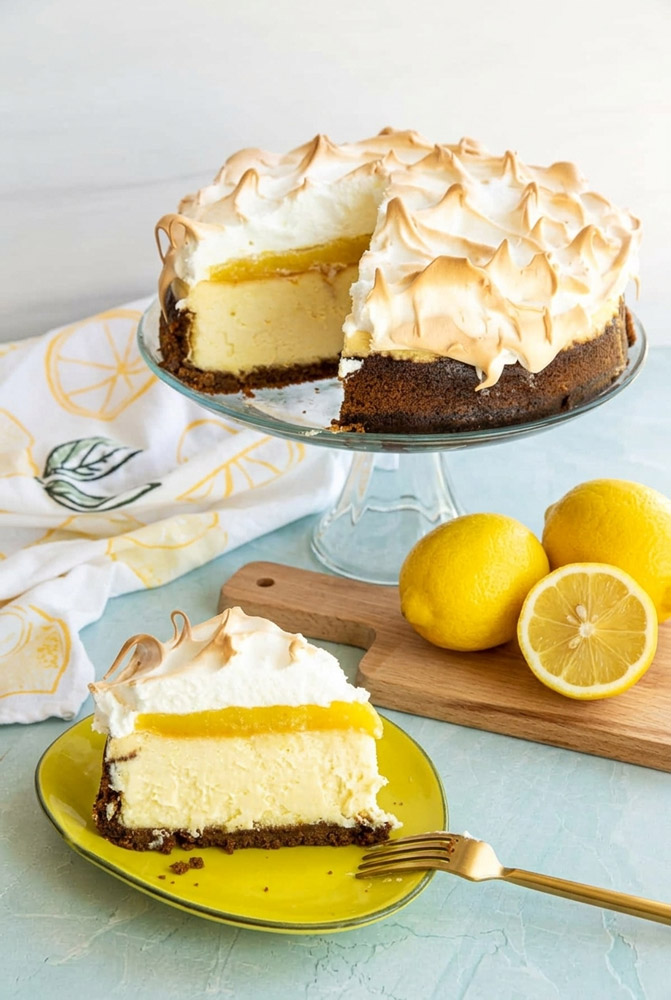
To achieve knife cuts worthy of a magazine cover, run a long, sharp chef’s knife under very hot tap water, wipe it completely dry with a clean towel, and make a single, decisive slice straight down. Wipe the blade clean and re-warm it under hot water before every single cut.
Pairings
Serve each slice garnished with a paper-thin wheel of fresh lemon and a sprig of fresh mint. The rich, creamy citrus profile pairs wonderfully with dry sparkling wine, Champagne, or an iced Earl Grey tea with lavender.
Storage & Make-Ahead Guidelines
- Refrigeration: Store leftover cheesecake loosely tented with foil or in a cake dome in the refrigerator for up to 4 days. Because meringue can weep after 24–48 hours due to refrigerator humidity, this dessert is best enjoyed within the first two days of assembly.
- Freezing Strategy: You can freeze the baked and cooled cheesecake (without the curd and meringue toppings) for up to 2 months. Wrap the cooled, unmolded cheesecake tightly in double layers of plastic wrap and a layer of heavy foil. Thaw overnight in the refrigerator before topping with freshly made lemon curd and toasted meringue.
Lemon Meringue Cheesecake
A bakery-worthy hybrid dessert featuring a crunchy spiced gingersnap base, silky-smooth lemon cheesecake layer, homemade lemon curd, and golden toasted meringue.
- Prep Time: 30 minutes
- Cook Time: 1 hour 45 minutes
- Total Time: 10 hours 45 minutes (8 hours 30 minutes)
- Yield: 12 to 14 slices 1x
- Category: Dessert
- Cuisine: American / Fusion
Ingredients
Gingersnap Crust
- 397g (14 oz / ~46 cookies) gingersnap cookies, finely crushed
- 113g (1/2 cup / 1 stick) unsalted butter, melted
Lemon Cheesecake Filling
- 904g (4 packages / 32 oz) brick cream cheese, room temperature
- 220g (1 cup) granulated sugar
- 2 large lemons, zested and juiced
- 1g (1 tsp) ground ginger
- 1/4 tsp kosher salt
- 4 large eggs, room temperature
- 60ml (1/4 cup) heavy cream
- 40g (1/3 cup) cornstarch
Lemon Curd & Meringue Layers
- 3 medium lemons, zested (2 tbsp) and juiced (120ml / 1/2 cup)
- 300g (1 1/3 cups) granulated sugar, divided (1 cup for curd, 1/3 cup for meringue)
- 3 large eggs, whites and yolks separated
- 40g (1/3 cup) cornstarch
- 45ml (3 tbsp) cold water
- 28g (2 tbsp) unsalted butter, sliced
- 1g (1/4 tsp) cream of tartar
Garnish
- Fresh lemon slices and fresh mint sprigs
Instructions
- Prep: Heat oven to 350°F (180°C). Bring 4 cups of water to a boil for the water bath.
- Make Crust: Combine crushed gingersnaps and melted butter. Press firmly into an 8 or 9-inch springform pan. Bake 10 minutes at 350°F, cool completely, then double-wrap pan exterior with heavy-duty foil.
- Make Batter: Beat softened cream cheese, 1 cup sugar, lemon zest, ground ginger, and salt on low, then medium for 3 minutes until smooth. Mix in eggs on low for 2 minutes. Stir in lemon juice and heavy cream for 30 seconds, then blend in cornstarch until just incorporated.
- Bake in Water Bath: Set foil-wrapped pan in a roasting pan. Add boiling water halfway up the sides. Bake at 350°F for 1 hour 15 minutes.
- Slow Cool: Turn oven off; prop door open 2 inches with a wooden spoon and rest cake inside for 1 hour. Remove, cool to room temperature, cover, and chill in the fridge for 6+ hours (or overnight).
- Cook Curd: Heat 1/2 cup lemon juice and 1 cup sugar in a pan until steaming. Whisk egg yolks, cornstarch, and water in a bowl. Temper hot juice into yolks, return all to pan, and whisk over medium-low for 1–2 minutes until thick. Remove from heat; whisk in 2 tbsp butter and 2 tbsp zest. Cool 1 hour.
- Assemble Base: Unmold cheesecake. Spread cooled curd on top, leaving a 1/2-inch border along the rim.
- Whip Meringue: Whip egg whites and cream of tartar on medium for 1 minute until foamy. Slowly add 1/3 cup sugar, increase speed to medium-high, and whip 5–6 minutes to stiff peaks.
- Toast & Serve: Preheat oven to 375°F (190°C). Spread meringue over cake, anchoring the edges first, and swirl into peaks. Bake 9–10 minutes until golden brown. Cool 20 minutes before slicing.
Notes
- Anchoring Tip: Spreading meringue directly onto the bare 1/2-inch cheesecake edge anchors the foam and keeps it from slipping off during slicing.
- Clean Slices: Wipe a hot, dry chef’s knife clean between every slice for crisp edges.
- Make Ahead: The cheesecake base can be baked and chilled up to 2 days in advance. Top with curd and meringue on the day of serving.
